Managing HPC environments is no small feat. Discover how observability can transform high-performance computing by providing real-time insights, ensuring reliability, and driving better research outcomes. Let’s break down what you need to know.
Achieving Observability in High-Performance Computing (HPC) Environments
High-Performance Computing (HPC) environments are the Ferraris of the computing world: blazingly fast, incredibly powerful, and designed to tackle some of the most complex problems known to science and industry. But just like any high-powered machine, HPC systems need constant tuning and monitoring to run smoothly. And here’s where observability becomes a game-changer.
Observability in HPC isn’t just a buzzword; it’s essential for keeping these supercomputers humming along efficiently, processing massive datasets, and delivering research breakthroughs without missing a beat. If you’re an IT infrastructure specialist, HPC system administrator, or researcher, understanding and implementing observability in your environment is critical. Let’s break down how and why.
Understanding the Complexity of High-Performance Computing (HPC)
What Exactly is High-Performance Computing?
At its core, High-Performance Computing (HPC) refers to the use of supercomputers and parallel processing techniques to solve complex computational problems. We’re talking about massive datasets, simulations that can take days (or weeks!) to complete, and algorithms that would leave your average computer gasping for air. HPC environments power everything from weather forecasting and climate research to modeling new drug interactions and exploring the universe.
What makes HPC environments unique is the use of parallel computing. Instead of performing tasks one after the other, HPC systems divide them into smaller chunks that can be processed simultaneously. This requires specialized hardware, like multi-core processors, high-speed interconnects, and vast amounts of memory, as well as software optimized for parallel execution. The result? Unmatched computational power.
The Challenges of Managing HPC Environments
But with great power comes great complexity. Managing an HPC environment is no walk in the park. Here’s why:
Why Observability is Crucial for Agile Development
- Scalability: HPC systems can scale to thousands or even millions of cores. Monitoring and managing resources at this scale require a Herculean effort, especially when workloads vary drastically.
- Performance Bottlenecks: Even the smallest inefficiency can snowball into a massive performance hit. Bottlenecks in data flow, memory access, or network communication can bring computations to a crawl.
- System Failures: HPC environments are complex and, unfortunately, prone to failures. A hardware glitch or a software bug can derail an entire simulation, wasting hours or days of valuable computation time.
- Data Management: Handling petabytes of data securely and efficiently is a constant challenge, especially when sensitive research data is involved.
Clearly, HPC systems need a robust strategy to keep them in peak condition. Enter observability.
Why Observability is Crucial for HPC Systems
The Role of Observability in HPC
Observability provides a deep understanding of what’s happening inside your HPC environment. Unlike traditional monitoring, which might alert you when something breaks, observability gives you real-time visibility into the inner workings of your system. It’s the difference between knowing your car has a flat tire (monitoring) and understanding why your tire keeps going flat and how to prevent it (observability).
For HPC, this means more than just tracking CPU usage or network throughput. It’s about understanding why a simulation is running slower than expected, how data is flowing across nodes, and where resources are being wasted. In an HPC environment, where even minor inefficiencies can be costly, observability helps teams make data-driven decisions to optimize performance and reliability.
Traditional Monitoring vs. Observability
Here’s a quick comparison to illustrate the difference:
- Monitoring: Reactive. It tells you something is wrong but not necessarily why. You get alerts like, “Node 34 is down” or “Memory usage is high.” It’s helpful, but it’s not enough.
- Observability: Proactive. It provides context. Observability tools allow you to understand what caused the issue, how widespread it is, and what impact it will have. For instance, you can see that “Node 34 is down because of a network bottleneck impacting data synchronization across multiple nodes.”
Impact on Research and Data Accuracy
In HPC environments, observability isn’t just about performance it’s about the quality of research. Imagine running a climate model simulation that takes days to complete, only to realize later that a data inconsistency skewed your results. With proper observability, issues can be detected and corrected in real time, ensuring data accuracy and preserving the integrity of research outcomes. For scientists and engineers, this can make the difference between a groundbreaking discovery and wasted effort.
Strategies for Implementing Observability in HPC Environments
Now, let’s talk about how to implement observability effectively. It’s not as simple as plugging in a tool and calling it a day. Achieving observability in HPC environments requires a thoughtful approach.
1. Collect and Analyze Logs, Metrics, and Traces
These are the three pillars of observability, and each one plays a vital role:
- Logs: Think of logs as your HPC system’s diary. They provide a historical record of events, like job completions, errors, and system messages. In an HPC setup, logs can help identify patterns that lead to performance degradation or failures.
- Metrics: Metrics give you real-time insights into your system’s health. For HPC, this could include CPU and GPU utilization, memory usage, disk I/O, and network throughput. Monitoring metrics helps you catch anomalies early, like a sudden spike in network latency that could signal a problem.
- Traces: Traces map out the flow of data and tasks through your HPC environment. They show how a request moves from one node to another, highlighting bottlenecks or inefficiencies in the process. In high-performance computing, where tasks are distributed across thousands of nodes, tracing is invaluable for optimizing data flow.
2. Use Distributed Tracing to Track Data Flow
HPC systems rely on efficient data movement across nodes. Distributed tracing allows you to follow the path of data, identifying where it slows down or gets stuck. For instance, if a large data set is being transferred inefficiently between nodes, distributed tracing can pinpoint the problem, enabling you to optimize network settings or data placement.
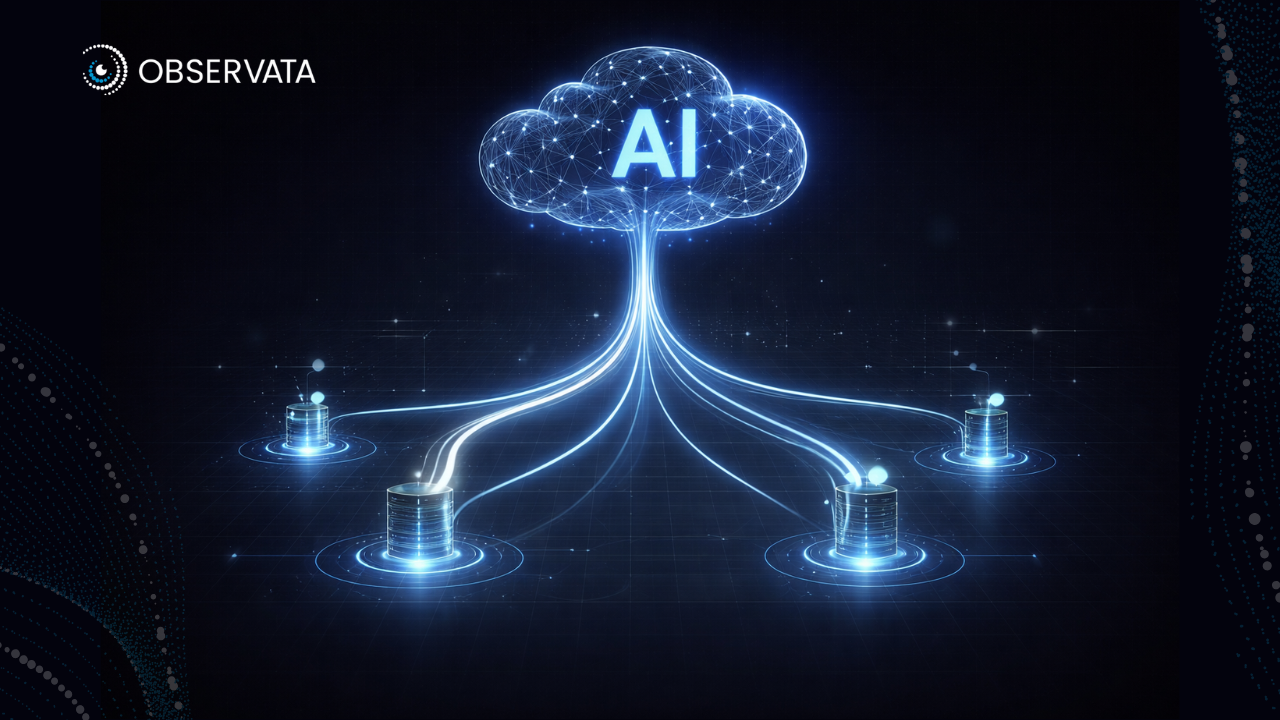
3. Leverage AI and Machine Learning for Anomaly Detection
Manual monitoring in HPC environments is like trying to find a needle in a haystack. There’s just too much data. That’s where AI and machine learning come in. By analyzing historical performance data, machine learning models can detect anomalies and predict potential failures. For example, if a machine learning algorithm notices that a particular node’s performance is degrading over time, it can alert administrators before a complete failure occurs.
4. Automate Resource Allocation
One of the most significant benefits of observability is the ability to optimize resource allocation. HPC workloads are notoriously unpredictable, but observability tools can track resource usage in real time and adjust allocations as needed. If a simulation suddenly demands more GPU power, resources can be reallocated automatically to prevent slowdowns.
5. Prioritize Security in Observability
HPC environments often handle sensitive and proprietary data. Observability tools must be secure, ensuring that logs, metrics, and traces are protected from unauthorized access. Implement encryption, role-based access control, and regular audits to keep your observability data secure. This is especially important for research institutions working with confidential or government-funded projects.
Specific Examples/Case Studies
Case Study: When Downtime Cost a Research Institution Big Time
Consider a large research institution that experienced severe performance degradation in its HPC cluster. The root cause? A memory leak that went undetected for weeks, leading to system crashes and significant delays in critical research simulations. If observability tools had been in place, the memory leak could have been identified and resolved quickly. Instead, the lack of real-time insights resulted in wasted computational hours and missed research deadlines.
Highlight Technology: Observata’s Comprehensive HPC Solutions
Companies like Observata are leading the charge in HPC observability. Their platform provides end-to-end visibility, using AI and advanced analytics to monitor HPC environments. Observata’s tools can automatically detect performance bottlenecks, predict hardware failures, and optimize resource allocation. For example, if a simulation is consuming more resources than expected, Observata’s system can redistribute workloads to maintain performance without manual intervention. This ensures that HPC environments run smoothly, securely, and efficiently.
Wrapping It All Up
High-Performance Computing is a powerhouse, driving breakthroughs in science, engineering, and industry. But without observability, even the most advanced HPC system is flying blind. Observability isn’t just a nice-to-have; it’s a necessity for optimizing performance, ensuring data accuracy, and preventing costly failures.
By implementing best practices like collecting logs, metrics, and traces, using AI for anomaly detection, and prioritizing security you can unlock the full potential of your HPC environment. Whether you’re simulating climate models, conducting genomic research, or crunching numbers for complex engineering projects, observability gives you the insights needed to succeed.
So, are you ready to transform your HPC infrastructure and make every computation count? It’s time to make observability your secret weapon.