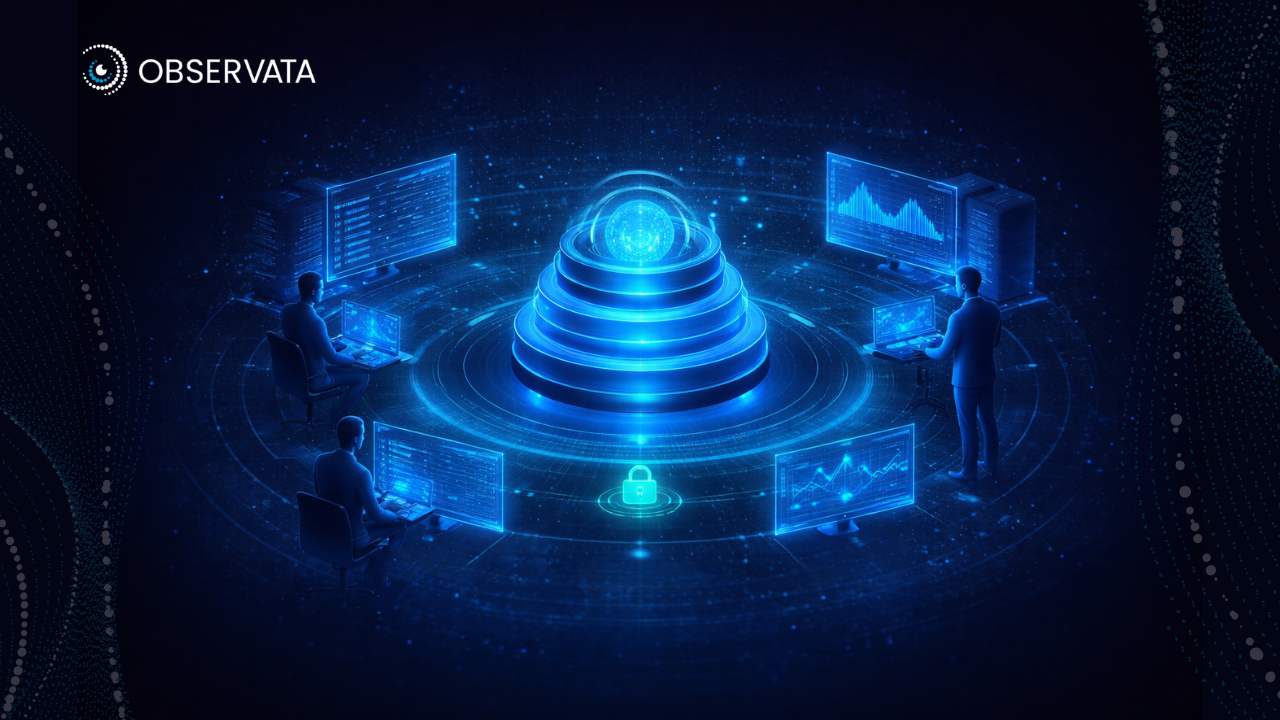
In the dynamic landscape of technology, the concept of observability has emerged as a pivotal tool, reshaping how we comprehend, monitor, and troubleshoot complex systems. Leaders often ask “Why should I care about Observability?”.
At its core, observability is the degree to which the internal state of a system can be inferred from its external outputs. Unlike mere monitoring, which focuses on surface-level metrics, observability delves deeper, providing insights into intricate systems by examining their behavior, performance, and internal workings.
Imagine a labyrinthine network or a sophisticated software application; the ability to observe and understand the system’s inner mechanisms is crucial for effective management and optimization. Traditional monitoring often falls short when dealing with intricate systems, leaving blind spots that hinder the identification of underlying issues. Observability addresses this limitation by emphasizing holistic insight and
Key pillars uphold the edifice of observability:
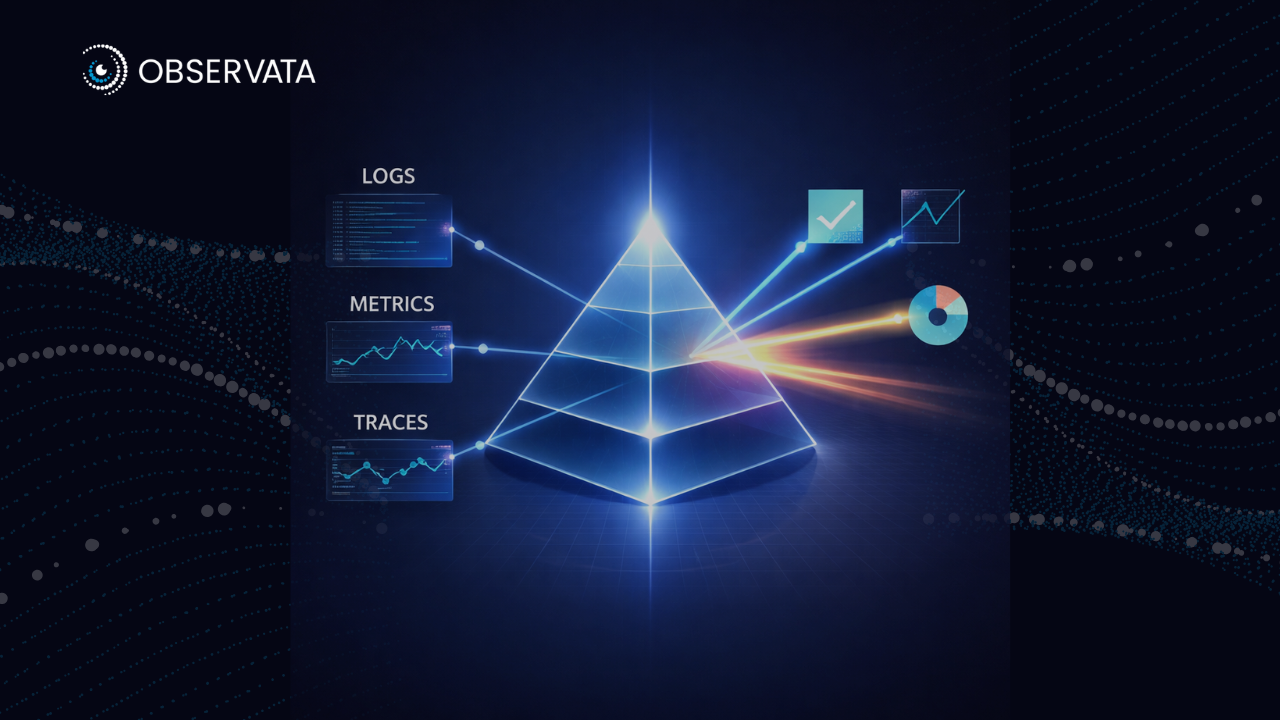
- Telemetry: Gathering diverse data points logs, metrics, traces, and more is fundamental. Metrics offer a numerical snapshot, logs provide detailed event information, and traces map the journey of a request through a system. Combined, they create a comprehensive view of system behavior.
- Analysis: Transforming raw data into actionable insights requires robust analytical tools. Machine learning, statistical models, and visualizations decode the collected data, uncovering patterns, anomalies, and performance trends.
- Contextual Understanding: Context enriches data. Understanding relationships between different components and events within a system contextualizes observations, enabling more informed decision-making.
- Proactive Approach: Observability empowers proactive problem-solving. Detecting anomalies before they escalate, pinpointing bottlenecks, and predicting potential failures enhance system reliability.
Observability transcends industries, from software development to IoT devices and beyond. Its application ensures resilient, optimized systems that can adapt to evolving challenges.
As the complexities of systems burgeon, the importance of observability intensifies. It not only aids in troubleshooting but also fosters innovation by providing insights that drive improvements and optimizations.
Why should you, as a business leader, care about observability?
Here are a few compelling reasons:
- Enhanced Problem-Solving: Observability equips businesses with the tools to swiftly detect and troubleshoot issues within their systems. By having a clear view of system behaviors, anomalies can be identified and resolved before they escalate, ensuring smoother operations and reduced downtime.
- Improved Performance: Understanding how systems function under different conditions enables optimization for better performance. Observability empowers organizations to fine-tune processes, enhancing efficiency and overall productivity.
- Customer-Centric Approach: In a competitive landscape, customer experience is paramount. Observability enables businesses to proactively identify and rectify issues that might affect user experience, thereby ensuring higher customer satisfaction and loyalty.
- Data-Driven Decision Making: By leveraging observability tools and techniques, businesses can make informed decisions backed by real-time, accurate data. This data-driven approach aids in strategy formulation, resource allocation, and future planning.
For companies dedicated to delivering competitive services, adopting observability can spark a transformative shift in their service delivery approach. This approach empowers them with valuable insights and facilitates informed decision-making. By monitoring, comprehending, and optimizing their systems for optimal performance, businesses can drive both growth and customer satisfaction to new heights.
In essence, observability isn’t just a buzzword; it’s a crucial aspect that empowers businesses to thrive in an increasingly complex and interconnected world.